

How to Do Safe Skin Needling for Sensitive Skin
Last Updated: November 1, 2026
Quick Summary
Safe skin needling for sensitive skin means using a gentler protocol than for normal skin, because sensitive skin reacts faster to trauma. Dial back the depth, frequency and aftercare, and get a professional assessment before your first session. If your barrier is compromised, calm the skin first and needle later.
- Pause strong actives such as retinoids and high-strength acids two weeks before treatment, unless your clinician says otherwise.
- Avoid waxing, threading and exfoliating scrubs on the treatment area one week before your session.
- Redness often settles within a few days, though deeper treatments and more reactive skin can take a little longer.
- For the first 24 hours, skip makeup, heavy sweating and swimming, and use only a gentle cleanser with lukewarm water.
- Avoid strong actives, exfoliants and alcohol-based products for at least a week after needling.
Table of Contents
- Why Sensitive Skin Needs a Different Approach to Skin Needling
- Skin Needling Contraindications: When to Say No
- Skin Needling Preparation: What to Do in the Weeks Before
- At-Home vs Professional Skin Needling for Reactive Skin
- Skin Needling Redness Duration: What Recovery Really Looks Like
- Skin Needling Aftercare for Sensitive Skin
- Book a Skin Consultation Before Your First Needling Session
- Frequently Asked Questions
Why Sensitive Skin Needs a Different Approach to Skin Needling
Safe skin needling for sensitive skin starts with one rule: less is more. Sensitive skin reacts to trauma faster, so the depth, frequency and aftercare all need to be dialled back compared with a normal skin plan. Sensitive skin generally responds better to a gentler protocol than a more aggressive one.
Skin needling is a treatment that uses fine needles to create tiny, controlled punctures in the skin. The skin responds by repairing the area. But sensitive skin can react more strongly to trauma. That changes everything about how the treatment should be done.
A standard needling depth that suits resilient skin can be too much for a reactive face, which may lead to redness or irritation. The goal is a measured plan built around your skin's tolerance.
Below, we break down who should avoid needling, how to prepare, and what recovery really looks like.
Skin Needling Contraindications: When to Say No
Skin needling contraindications are the conditions that make treatment unsafe or unwise. If any apply to you, stop and speak to a qualified professional before booking. This is not a list to skim past.
Common reasons to hold off include:
- Active acne or open breakouts in the treatment area
- A current skin infection, cold sore or wound
- Known allergy to numbing cream ingredients
- Recent sunburn or a fresh chemical peel
- Pregnancy, unless cleared by your doctor
- Blood-thinning medication, unless your doctor approves
- A history of keloid scarring
There is also a category we call "not yet." If your barrier is already compromised, with stinging, flaking or constant redness, needling can make it worse. We would rather calm the skin first and needle later.
Needling over active rosacea or a damaged barrier can increase irritation. When in doubt, get a professional opinion rather than guessing.
Skin Needling Preparation: What to Do in the Weeks Before
Good skin needling preparation often involves a few weeks of gentle care beforehand. The aim is to support the barrier and reduce anything that may raise the risk of irritation.
Here is one general approach to preparing reactive skin, to be confirmed with your clinician:
- Two weeks before: pause strong actives such as retinoids and high-strength acids, unless your clinician says otherwise
- Daily: focus on gentle cleansing and barrier-supporting moisturiser
- One week before: avoid waxing, threading and exfoliating scrubs on the treatment area
- Three days before: skip alcohol-heavy products and new cosmetics
- Day of: arrive with clean skin, no makeup, and tell your therapist about any changes
A ready-made calming routine can take the guesswork out of this stage. The CALM SKIN KIT is designed for dehydrated, reactive skin, with a gentle foaming enzyme cleanser and two soothing serums to steady the barrier before treatment.

If you are unsure where to start, discuss a patch test with your clinician before your session.
At-Home vs Professional Skin Needling for Reactive Skin
For reactive skin, professional assessment is generally recommended. At-home rollers and stamps can be hard to control, and it is easy to go too deep or too often.
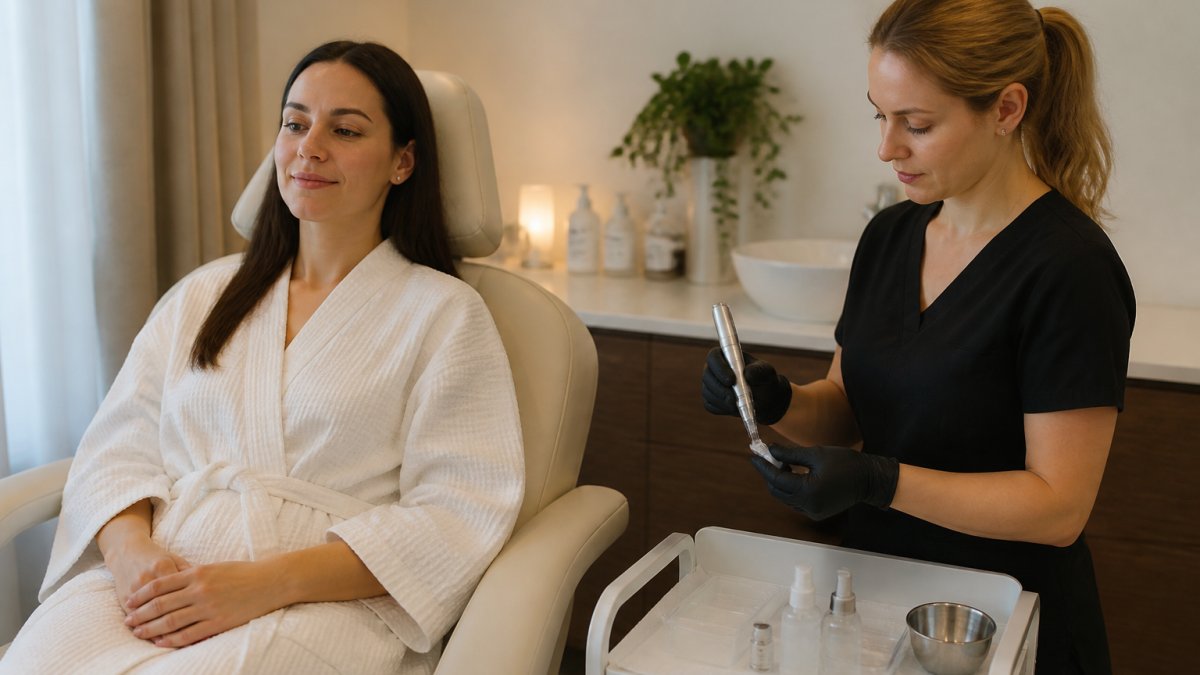
Here is the honest comparison:
| Factor | At-Home Roller | Professional Treatment |
|---|---|---|
| Depth control | Fixed, easy to overdo | Adjusted per area |
| Sterility | Hard to maintain | Clinical standards |
| Frequency | Often too frequent | Planned and spaced |
| Suits reactive skin | Higher risk | Safer with assessment |
At-home tools are not evil. But for sensitive skin, they leave too much to chance. A therapist can observe how your skin reacts during the session.
Professional treatment often includes assessment, a plan and aftercare guidance. You can read more on the benefits of professional skin needling to see how a clinical approach supports long-term skin health.
Best for: reactive skin that needs controlled, assessed treatment. Skip if: you want a quick DIY fix and are not prepared to follow aftercare properly.
Skin Needling Redness Duration: What Recovery Really Looks Like
Skin needling redness duration is usually shorter than people fear. Redness often settles within a few days, depending on depth and skin sensitivity. Deeper treatments and more reactive skin can take a little longer.
Here is what recovery can generally involve:
- First few hours: mild redness and warmth, like a light sunburn
- Day one to two: redness fades, skin may feel tight or dry
- Day three to five: texture settles, light flaking is possible
- Week one: skin generally looks calmer and more even
For a busy professional, timing around work commitments can matter, and your clinician can advise on scheduling. For a deeper, professional-level breakdown of needling recovery timelines, read Skin Needling Recovery Time for Professionals.
Watch out: picking at flaking skin or applying strong actives too soon can prolong redness and undo the work. Let the skin settle on its own.
Skin Needling Aftercare for Sensitive Skin
Skin needling aftercare for sensitive skin is where results are won or lost. The first 48 hours are about protection. After that, it is about gentle hydration and rebuilding the barrier.
Keep it simple:
- First 24 hours: no makeup, no exercise that makes you sweat heavily, no swimming
- Cleansing: use a gentle cleanser and lukewarm water only
- Hydration: apply a soothing, fragrance-free moisturiser
- Sun protection: daily SPF is non-negotiable, even on cloudy days
- Avoid: strong actives, exfoliants and alcohol-based products for at least a week
A recovery-focused moisturiser may suit compromised skin. The Recovery Cream 50g is designed for compromised skins and features V8 Peptide Complex.

For extra soothing on reactive days, the Calm & Soothe sheet masks are designed for inflamed and impaired skins seeking moisture and hydration.

If redness, swelling or irritation gets worse rather than better after a few days, contact your clinician.
Book a Skin Consultation Before Your First Needling Session
Sensitive skin and needling can work well together, but only with the right plan. The safest path is a proper assessment before your first session. That is how we approach it at The Skin Code.
A consultation can help assess your skin, triggers and goals before a plan is made.
At The Skin Code, we combine expert advice with luxury care across our skin and self-care treatments, with a focus on skin health and enhancing your natural features.
Ready to find out more? Book a consultation at The Skin Code to discuss your skin.
Frequently Asked Questions
Can you have skin needling if you have sensitive skin?
Often yes, but the plan has to be adjusted. Sensitive skin is often treated with shorter sessions, shallower depths and longer gaps between appointments, and your clinician will assess whether your barrier is calm before starting. If your skin is currently inflamed, peeling or reacting, needling is usually postponed. A consultation is the point where suitability is decided, and it is also where any skin needling contraindications get checked off before a device comes near your face.
How long does redness last after skin needling?
For many people, redness after skin needling settles within a few days. Sensitive skin may take a little longer to settle. Deeper professional treatments tend to produce more visible redness than light at-home rollers. If redness is spreading, hot to touch or still pronounced after several days, contact the clinic rather than waiting it out.
What should I avoid before skin needling?
Skin needling preparation often involves pausing strong actives such as retinoids and exfoliating acids beforehand, and avoiding waxing and laser in the treatment area. Discuss any medication, including blood-thinners, with your doctor. Arrive with clean skin and no makeup. Tell your therapist about any recent peels, sunburn or cold sores, because these change the timing. If you are unsure about a product, bring it to the consultation rather than guessing.
Can skin needling make sensitive skin worse?
It can if the barrier is already compromised, the depth is too aggressive or aftercare is skipped. Needling can be performed in a controlled way, and sensitive skin may tolerate it better when sessions are spaced out. The CALM SKIN KIT ($135.00) from The Skin Code is designed to calm, soothe and improve hydration for dehydrated, irritated skin. Stop and seek advice if irritation increases rather than settles.
Your skin deserves a plan made for it, not a generic protocol. The Skin Code offers expert-led skin needling, calming aftercare products and a warm, luxurious setting in North Sydney. With personalised advice, barrier-focused care and treatments designed to strengthen skin resilience, we help you feel polished and confident. Get started with The Skin Code and book your consultation today.
